
What Size Solar Inverter Do I Need? A Quick Sizing Guide
Introduction
Choosing the right solar inverter is critical to getting the most out of your photovoltaic (PV) system. Many DIY installers and homeowners ask, “what size solar inverter do I need?” This guide will walk you through an easy, step-by-step process to accurately size your inverter, avoid common pitfalls, and highlight how our Lefor Solar Inverter Series can fit your specific needs.
Calculate Your Total Power Requirement
- List Your Appliances & Loads
- Note the wattage (W) of each device: fridge (150 W), LED lights (10 W each), laptop (60 W), etc.
- Sum up concurrent usage—e.g., fridge + two lights + laptop = 150 + 20 + 60 = 230 W.
- Add a Safety Margin
- Multiply by 1.2 (20% extra) to cover minor surges → 230 W × 1.2 ≈ 276 W.
Tip: If you’re planning future expansions (e.g., adding a washing machine), build in an additional 10–30%.
Account for Surge & Starting Currents
Some appliances require a higher “surge” power at startup:
| Appliance | Running Watts | Surge Watts |
|---|---|---|
| Refrigerator | 150 W | 600 W |
| Air Conditioner | 1,200 W | 2,400 W |
| Well Pump | 800 W | 1,600 W |
- Sizing Rule: Your inverter’s peak capacity must exceed the highest surge demand.
- Example: If your total running load is 500 W but your AC needs 2,400 W surge, choose an inverter with ≥ 2,500 W peak.
Match Inverter Efficiency & Battery Bank
- Efficiency Rating: Look for ≥ 95% to minimize energy loss.
- Battery Voltage: Ensure the inverter matches your battery bank voltage (12 V, 24 V, or 48 V).
- Our Recommendation: The Lefor 3000W from the Lefor Solar Inverter Series works seamlessly with a 24 V battery bank and delivers 96% efficiency.
Choose Your Inverter Type
- Pure Sine Wave
- Best for sensitive electronics, ensures clean, stable power.
- Modified Sine Wave
- Cheaper, but may cause humming or overheating in some devices.

Pro Tip: For home systems and RVs, always go with a pure sine inverter to protect your investment.
Selecting “What Size Solar Inverter Do I Need”
Combine your findings:
- Running Load (with margin): e.g., 276 W.
- Highest Surge: e.g., 600 W from fridge.
- Future Growth Buffer: +20% → (276 W + 600 W) × 1.2 ≈ 1,091 W.
→ Recommended Inverter Size: 1,200 W minimum.
If you later add an air conditioner (2,400 W surge), you’d bump up to a 3,000 W inverter—like the Lefor 3000W in the Lefor Solar Inverter Series.
Case Study: Small Off-Grid Cabin
- Appliances: LED lighting (4 × 10 W), mini-fridge (150 W), laptop (60 W), water pump (300 W surge).
- Calculation:
- Running: (40 W + 150 W + 60 W) × 1.2 = 300 W
- Highest Surge: 300 W (pump) × 1.2 = 360 W
- Final Size: 660 W → Round up to a 1,000 W inverter.
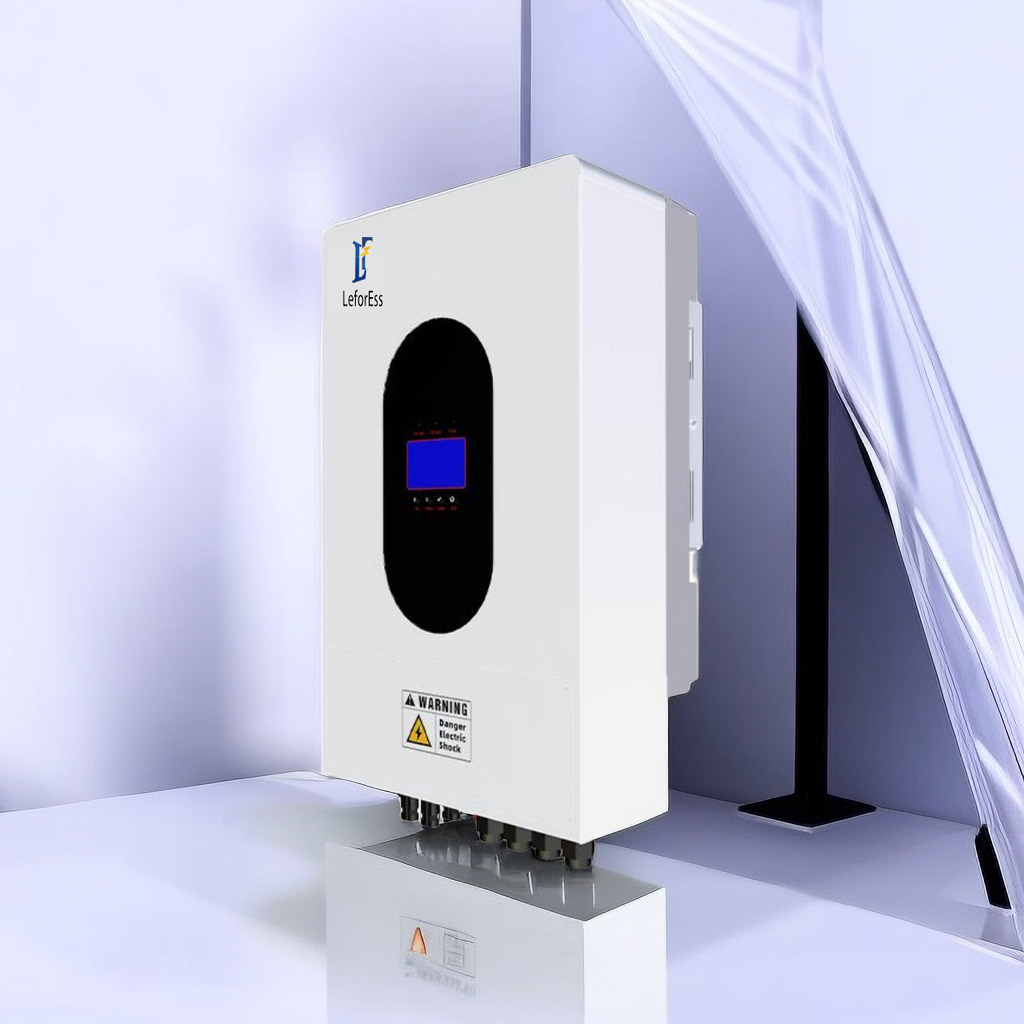
Product Highlight: Lefor Solar Inverter Series
- Lefor 1000W – Ideal for cabins, small RVs, and backup lighting.
- Lefor 2000W – Perfect for larger off-grid homes or tiny houses.
- Lefor 3000W – Supports AC units, well pumps, and full home backup.
Each model features advanced MPPT charge controller integration and a user-friendly LCD monitoring panel.
Conclusion & Next Steps
By following this simple framework—listing your loads, accounting for surge currents, adding growth margins, and matching your battery voltage—you’ll confidently determine “what size solar inverter do I need.” Ready to find the perfect match?
- Browse the Lefor Solar Inverter Series to compare models and specs.
- Check out our detailed product datasheets and user manuals for more in-depth guidance.
At Lefor, our mission is to power your life with innovative batteries and inverters—efficiently and affordably.