
what charger for lifepo4 battery:Long-Term Maintenance Guide for lfp Battery
LiFePO4 batteries are renowned for their superior safety and long cycle life. However, achieving their full potential and lifespan heavily depends on using a correctly matched, intelligent charger. Using an incompatible charger can permanently damage your battery and create safety hazards.
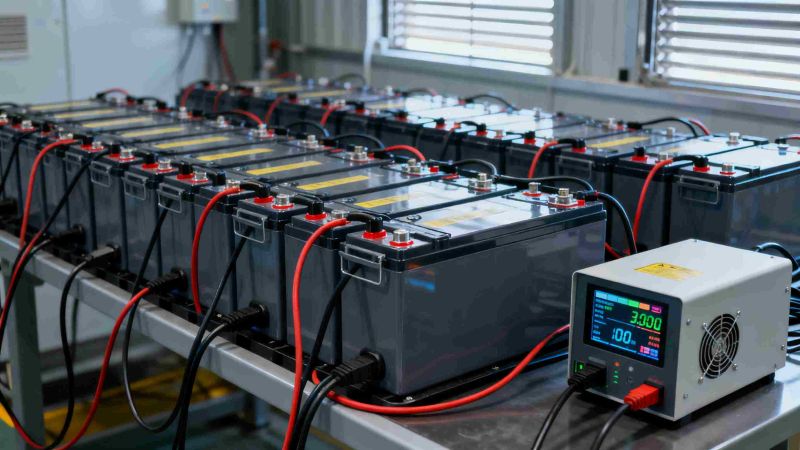
Key Principles: Understanding LiFePO4 Charging Needs
Unlike lead-acid batteries, LiFePO4 chemistry requires precise voltage limits and does not need a float charge stage. The essential requirement is a “Constant Current / Constant Voltage” charger designed specifically for LiFePO4 chemistry.
- Precise Voltage Matching is Critical
- Standard Voltage: A 12.8V LiFePO4 battery pack requires a bulk/absorption charge voltage typically between 14.2V and 14.6V. Ensure your charger’s maximum output voltage matches this range.
- Never Use Lead-Acid Chargers: Chargers designed for lead-acid batteries use different voltage profiles and a “float” mode that will overcharge and degrade a LiFePO4 battery.
- Select the Appropriate Charging Current
- General Rule: A charge rate between 0.2C and 0.5C is recommended. For a 100Ah battery, this means an ideal charging current of 20A to 50A.
- Trade-off: A lower current (0.2C) is gentler and may extend battery life, while a higher current (0.5C) provides faster recharge times.
How to Identify a High-Quality Charger for LiFePO4 Batteries
A reliable, professional-grade charger for LiFePO4 batteries should include these features:
- Smart Communication (Preferred): High-end chargers can communicate with the battery’s BMS. This allows them to automatically identify the battery and set the optimal charging curve for safe, “plug-and-play” operation.
- Comprehensive Safety Protections: Must include: Over-voltage Protection, Short-Circuit Protection, Over-current Protection, and Temperature Compensation. A temperature sensor probe is crucial for adjusting the charge voltage based on ambient conditions.
- Multi-Mode Versatility: For RV or marine users, a smart charger that can seamlessly switch between AC shore power, generator, and solar input adds significant convenience.
Best Practices for Use and Maintenance
- Regular Inspection: Visually inspect the charger cable and plugs for damage before each use.
- Ensure Ventilation: Always charge in a well-ventilated area to prevent heat buildup in both the battery and the charger.
- Long-Term Storage: If storing the battery for over a month, charge it to 50-60% state of charge before disconnecting—this is the ideal storage level for LiFePO4 chemistry.
Conclusion
Investing in a high-quality charger for LiFePO4 batteries is not an extra expense; it is a necessary investment to ensure the safety, performance, and promised longevity of your battery. Of course, selecting a high-performance lithium iron phosphate battery is equally important. Currently, our inventory of this product is limited—inquire now! We will provide you with premium, efficient service.