How to Choose the Right Battery for Solar Storage: A Practical Guide for B2B Buyers
When businesses invest in solar energy, the panels often take center stage. However, the true performance of any commercial solar system depends on choosing the right battery for solar storage. The right battery delivers stable power, reduces energy costs, and protects against outages and peak-hour pricing. Conversely, a poor battery choice leads to inefficiency, safety risks, and diminished ROI.
When I guide B2B buyers or small commercial customers, I focus on the specific factors that shape real-world performance and long-term value. I examine why the business needs a reliable battery, how battery chemistry affects performance, how to size the storage correctly, and how to evaluate key specifications such as cycle life, power output, efficiency, and warranty terms. I also check installation conditions and supplier credibility, because both can decide whether the system performs as promised.
If you want a battery that supports your business today and scales with you tomorrow, you need more than technical specs — you need a clear strategy. Let me walk you through the exact factors I evaluate when choosing the right battery for solar storage.
How Different Battery Chemistries Impact Commercial Performance?
I always begin with chemistry because it defines safety, lifespan, efficiency, and long-term cost.
Most commercial buyers choose between:
- Lithium Iron Phosphate (LFP)
- Lead-acid (including AGM and GEL)
I almost always recommend LFP because it offers:
- Higher cycle life
- Better thermal stability
- Higher efficiency
- Lower long-term costs
For businesses that want safety, consistency, and scalability, LFP chemistry provides a much stronger foundation. If your budget is limited, lead-acid batteries may be a better fit for you.


How to Evaluate Battery Capacity and Power Output
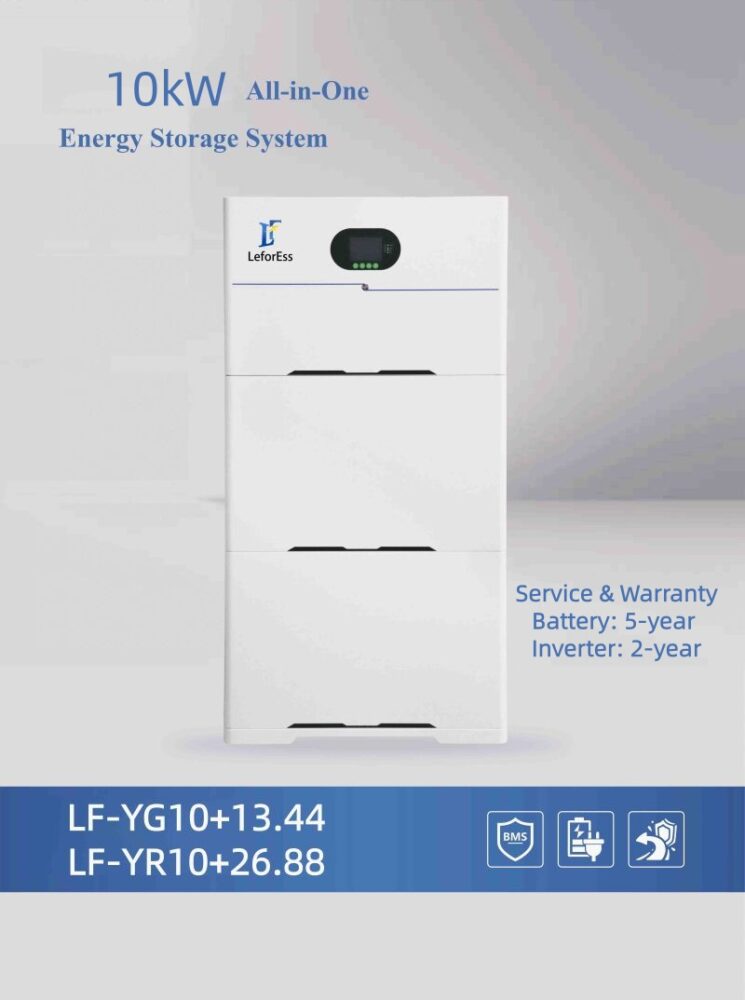
Capacity tells you how much energy the battery stores. Power output tells you how much energy it can deliver at once. I always analyze both specs together because they directly shape the battery’s real-world performance.
If your business uses heavy machinery, HVAC equipment, water pumps, or compressors, you need strong continuous and surge power. If you run a small office or retail operation, you may need more storage than surge capability.
I study your operational profile first, then select a battery that matches your true daily and peak energy needs. A battery only performs at its best when capacity and power align with your load profile.
How Battery Lifespan and Cycle Life Affect ROI?
Every buyer I advise cares about ROI — especially B2B buyers managing long-term assets. The battery’s cycle life determines how long it lasts before its capacity begins to drop.
An LFP battery often delivers 6,000–10,000 cycles, while lead-acid may only provide 500–1,000 cycles under commercial use. This difference creates major cost implications.
If you want a battery that lasts 10–15 years and performs consistently through thousands of cycles, cycle life becomes one of your most important decision factors.
How Safety Standards and Certifications Influence Your Choice?
I take safety seriously, especially when a commercial system runs indoors or near staff. A dependable battery for solar storage must carry the right certifications, including:
- UN38.3 – Transport safety
- IEC 62619 – Industrial battery safety
- UL 1973 – Stationary energy storage safety
- UL 9540A – Thermal runaway testing
These certifications prove the battery can handle heat, vibration, electrical stress, and real-world risks. If a supplier cannot provide certification reports, I treat it as a major red flag — and I recommend that every business does the same.
How to Size a Battery for Solar Storage Based on Load Profiles?
No part of the selection process influences performance more than sizing. I always start with three questions:
- What is your peak load?
- How much energy do you use daily?
- How long do you want backup power to last?
If your business runs production equipment, cold rooms, pumps, or medical devices, you need a larger, higher-output system. If you only need backup for lighting, computers, and POS systems, your storage requirements drop significantly. Correct sizing ensures reliability without overspending.
How Charge/Discharge Efficiency Shapes Daily Performance?
I check efficiency because it tells me how much energy your battery actually keeps. High-quality LFP batteries often deliver 90–95% round-trip efficiency, while lower-end systems lose more energy during each cycle.
These losses add up quickly for commercial users. If you want consistent, predictable daily performance, efficiency becomes a key factor worth prioritizing.
How Environmental Conditions Affect Battery Selection?
I always evaluate the installation environment before recommending a battery. Heat, humidity, and ventilation change how a battery performs and how long it lasts.
For example:
- Hot environments accelerate battery degradation.
- Poor ventilation increases safety risks.
- Outdoor installations require strong IP-rated enclosures.
A battery performs at its best when the environment supports stable temperature and airflow.
How to Compare Warranty Terms as a B2B Buyer?
A warranty tells me how confident the manufacturer is in its product. When I compare warranties, I look for:
- Guaranteed cycle life
- Capacity retention over time
- Clear replacement terms
- Long-term support availability
A solid warranty protects your purchase and ensures the performance you paid for. If the terms feel vague or unusually short, I treat it as a warning sign.
How to Choose a Reliable Supplier or Manufacturer?
Even the best battery disappoints if the supplier cuts corners. I evaluate suppliers based on transparency, test data, certification, warranty support, engineering knowledge, and communication.
A trustworthy supplier becomes a long-term partner who supports your system as your business grows. I always value responsiveness and technical expertise because both predict long-term support quality.
Final Thoughts: Choose Your Battery with Strategy, Not Guesswork
I’ve guided many businesses through this decision-making process, and I’ve seen the difference a well-chosen battery for solar storage makes. The right battery lowers costs, protects operations, and strengthens your energy independence. The wrong battery leads to downtime, inefficiency, and frustration.
When you understand chemistry, capacity, cycle life, efficiency, safety certifications, installation conditions, warranties, and supplier credibility, you make a confident long-term investment. Your business deserves a system that performs reliably for years, not one that creates avoidable problems.
If you want help choosing the right battery or comparing suppliers for your project, I’m always ready to guide you through the process on this independent site. You don’t need guesswork — you need clear, practical advice that fits your operational needs.