
The Ultimate Guide to 5kW Off-Grid Solar Systems: Specifications, Application Scenarios, and User Selection Strategies
In modern society, energy security and environmental protection have become key concerns for every household and business. Especially in areas with unstable power grids or remote locations, off-grid solar systems have become an ideal choice for ensuring a stable power supply.
This article will provide an in-depth analysis of a 5kW off-grid solar system, from technical specifications and target users to purchasing strategies, giving you a comprehensive understanding of how to choose the best off-grid system for your home, remote cabin, or small business.
Record year for renewables—Read More
What is an Off-Grid Solar System?
An off-grid solar system is an independent power supply system that does not rely on the power grid. It typically consists of the following core components:
- Solar panels (PV panels): Responsible for converting sunlight into direct current (DC).
- Battery storage (LiFePO4): Stores electrical energy generated during the day for use at night or on cloudy days.
- Inverter: Converts DC power into alternating current (AC) commonly used in homes or businesses.
- BMS (Battery Management System): Monitors battery status to ensure safe operation.
Working Principle: During the day, solar panels generate electricity to power the load and charge the battery; at night or when sunlight is insufficient, the system automatically draws power from the battery. Some systems support auxiliary charging from the grid or a backup generator.
Applicable Scenarios
- Remote residences and vacation homes
- Small businesses or production facilities
- Home backup power and emergency power supply
- Self-sufficient energy users and environmental enthusiasts
Detailed Specifications of a 3.5kW Off-Grid Battery Solar System
| Parameters | LF-Stackable Series |
|---|---|
| Inverter Rated Power | 5kW |
| Peak Power | 10kVA |
| Battery Capacity | 15.36 kWh / 20 kWh / 25 kWh / 30.72 kWh |
| Battery Voltage | 51.2V |
| Battery Type | LiFePO4 ( Lithium Iron Phosphate) |
| Solar Input | Maximum 5 kW, MPPT 120–450V DC |
| AC Output | 230V ±5% |
| Switching Time | <15ms ( Fast Seamless Switchover) |
| Protection Rating | IP20 ( Indoor Installation) |
| Warranty | 5 Years |
Key Selling Points Analysis
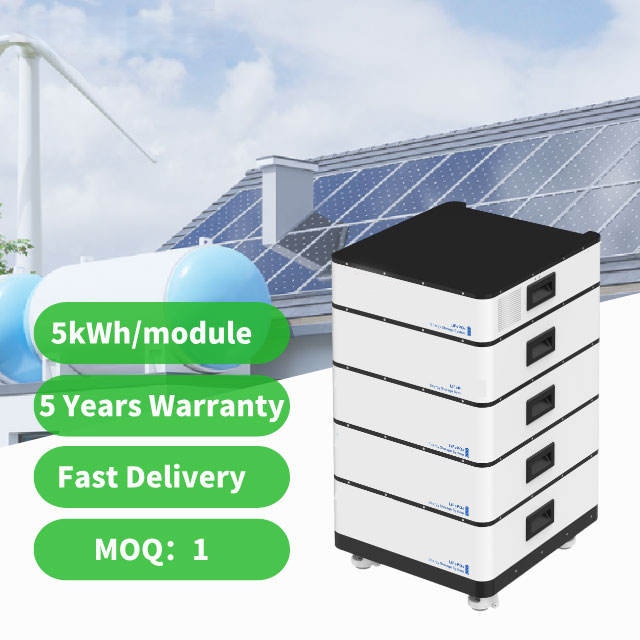
Modular Capacity Expansion: Starting from 15.36kWh, with future upgrades to 30.72kWh via battery modules.
Long-Life Battery: LiFePO4 batteries have a cycle life of 6000+ cycles, ensuring long service life.
Fast Switchover: Automatic switching in <15ms, eliminating downtime for critical loads such as refrigerators, computers, and medical equipment.
Flexible Charging Strategy: Solar or grid priority settings can be configured to improve efficiency and reliability.
Applicable Cases
Target User Classification
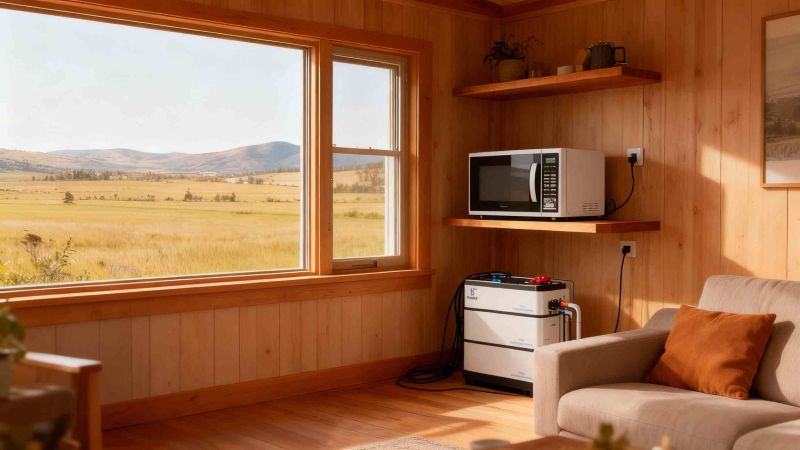
Remote Residences/Cabins: Families or vacation homes located far from the grid and desiring energy self-sufficiency.
Home Backup Power Users: In areas with unstable power grids, ensuring power supply to critical equipment. 3. Environmental/Energy Independence Seekers; Focus on sustainable energy and reducing carbon footprint.
Small Businesses/Production Facilities: Farms, remote workshops, small offices, etc., requiring stable off-grid power.
Social Welfare/Off-Grid Communities: Microgrid projects promoted by remote communities or NGOs.
DIY/Solar Energy Enthusiasts: Tech-savvy users interested in system expansion and battery optimization.
Typical Cases
- Remote cabin: A 5kW system can power the entire house for 15–30 hours.
- Home emergency backup: Ensures refrigerators, computers, and lighting continue to operate during power outages.
- Small business facilities: Independently operating equipment, unaffected by the grid, improving productivity.
Advantages and Pain Points of Off-Grid Systems
Advantages
- High integration, easy installation
- Modular batteries, expandable capacity
- Long LiFePO4 battery life
- Quick switching ensures critical loads
- Flexible charging strategies optimize energy utilization
Potential Pain Points
- Higher initial investment
- Installation requires technical support
- IP20 protection rating, not suitable for outdoor use
- Long-term maintenance costs need to be considered
Feel free to consult our business experts anytime to address any potential pain points with your purchased items.
How to Choose the Right Off-Grid System for You?
Selection Steps
Assess Electrical Load: Calculate peak and average power to determine the required battery capacity.
Plan the Solar Panel Array: Design series/parallel connections according to the MPPT range to ensure stable power generation.
Consider the Installation Environment: Indoor installation, good ventilation, avoid moisture and dust.
Choosing Battery Capacity and Expansion Strategy: Start with a small capacity, then expand modularly later.
Confirming Warranty and After-Sales Service: Confirm service support, transportation, and installation plans with the supplier.
Common Misconceptions
- Buying too small a battery leads to frequent deep discharges.
- Buying too large a battery results in wasted money.
- Neglecting installation environment and safety measures.
Return on Investment and Economic Analysis
Purchasing a 5kW off-grid solar power system may involve a high initial investment, including inverters, batteries, solar panels, and installation costs, but its long-term economic value is substantial. For an average household with a daily electricity consumption of approximately 20 kWh, the system can cover most of their electricity needs, saving nearly $100 in electricity bills per month, with an expected payback period of about 10 years. Utilizing LeforESS modular LiFePO4 batteries, which have a long lifespan and are scalable, means that future load increases can be addressed simply by adding battery modules, without replacing the main equipment.
Besides electricity cost savings, the off-grid system can replace diesel generators, reducing fuel expenses and maintenance costs, and improving power supply stability. Through proper planning of solar panel placement and intelligent load management, power generation efficiency can be maximized, further shortening the payback period. For users seeking energy independence, environmental friendliness, and long-term savings, this system not only guarantees power supply but is also a worthwhile long-term investment.
Conclusion and Recommendations
The LeforESS 5kW off-grid battery system is ideal for homes, remote cabins, and small commercial facilities. Its modular design, fast switchover, long cycle life, and flexible charging strategies make it a reliable solution for energy independence and emergency backup.
FAQ
Q1: How long can the system provide overnight power?
A1: The 15.36 kWh model provides approximately 7–15 hours, and the 30.72 kWh model provides 15–30 hours.
Q2: Can the battery capacity be expanded?
A2: Yes, it features a modular design, allowing for the stacking of battery modules without replacing the inverter.
Q3: How to charge when solar power is insufficient?
A3: It can be charged via AC grid connection or a backup generator.
Q4: Is it suitable for outdoor installation?
A4: The system has an IP20 protection rating; indoor or protected environment installation is recommended.