
Home Energy Storage: Why Wait for Powerwall?
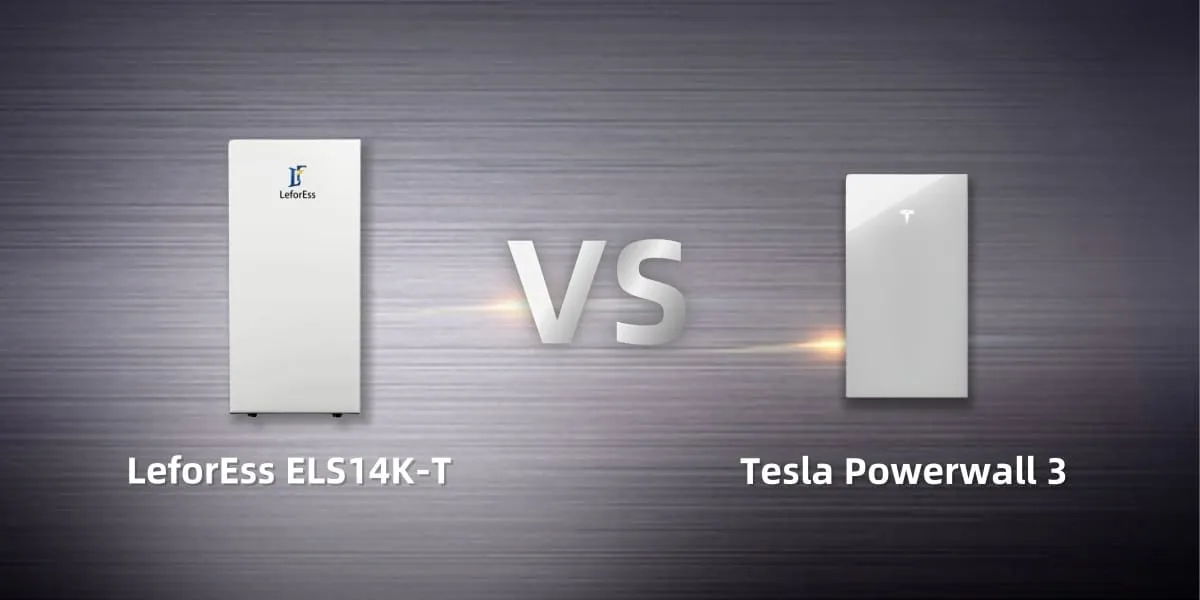
As the deployment of distributed home energy systems accelerates and power supply anxieties rise due to extreme weather, Tesla Powerwall once dominated the market with its brand prestige. However, breakthroughs in domestic energy storage technology, exemplified by the LeforEss ELS14K-T, are redefining the “value benchmark” for home energy storage with parameters more tailored to the Chinese context. This 14.33kWh liquid-cooled LiFePO4 battery comprehensively outperforms the Tesla Powerwall 3 in core dimensions such as capacity, cycle life, and environmental adaptability.
Core Specifications: Larger Capacity, Longer Lifespan
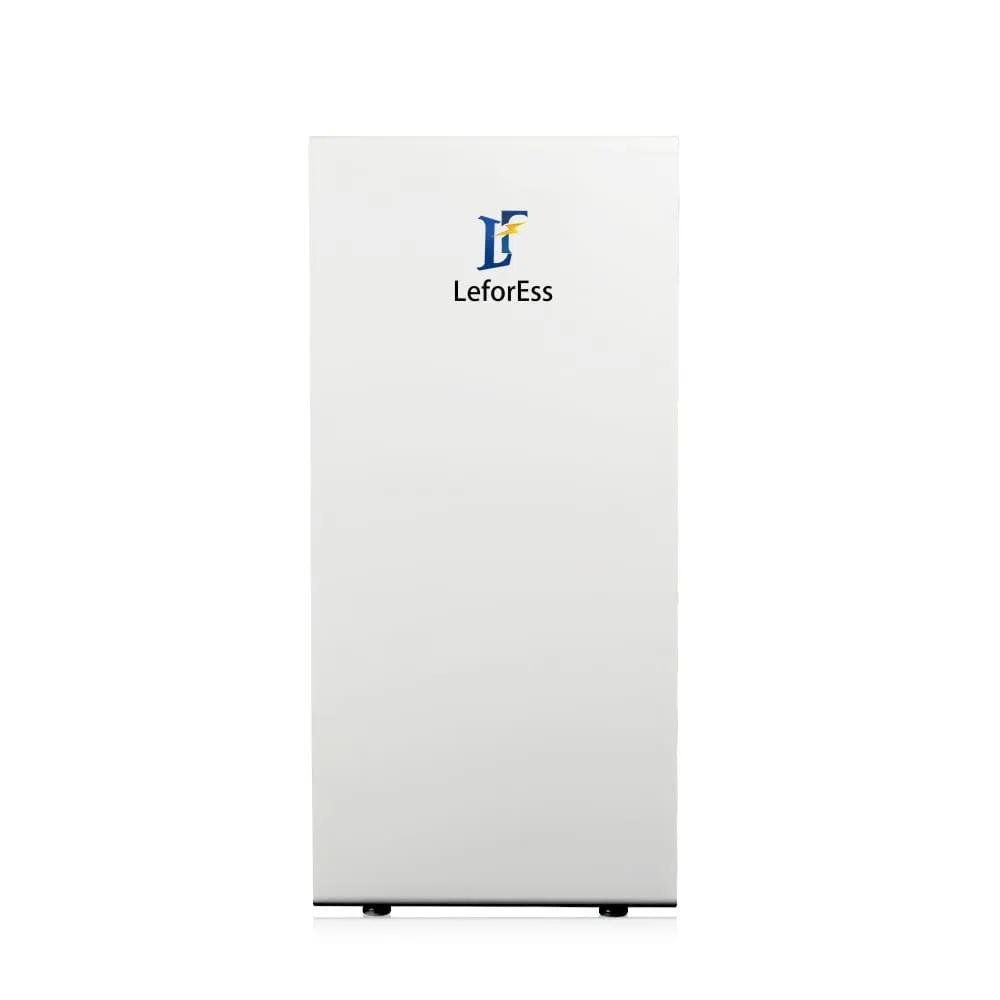
Compared to the Tesla Powerwall 3, the ELS14K-T directly surpasses in usable capacity:
- ELS14K-T: 14.33kWh (51.2V/280Ah), sufficient for 6–8 hours of backup power for Chinese households (covering core loads like lighting, refrigerators, and routers at 2kW);
- Powerwall 3: 13.5kWh nominal capacity, with more significant attenuation under temperature fluctuations (e.g., capacity retention drops below 85% at temperatures above 40℃).
The gap in cycle life is even more striking:
The ELS14K-T uses Grade A LiFePO4 cells, supporting ≥10,000 cycles (with ≥80% capacity retention) — equivalent to over 27 years with one charge-discharge cycle per day. In contrast, the Powerwall only offers a “10-year warranty,” with an actual cycle count of ~3,650 cycles (10 years × 365 days), less than 1/3 of the ELS14K-T’s lifespan.
Liquid Cooling/Heating: Full-Scenario Adaptation (-20℃ to 50℃)
China’s vast territory means extreme temperature variations, from -20℃ winters in the north to over 40℃ summers in the south. Conventional energy storage batteries often suffer from severe capacity loss and shortened lifespans due to temperature stress. The ELS14K-T’s liquid cooling/heating system achieves two breakthroughs:
- Wide Temperature Stability: Operates stably in 0~95% RH (non-condensing) environments, supporting charging/discharging at -20℃ (via a heating module) and efficient heat dissipation at 50℃ (liquid cooling improves heat dissipation efficiency by 40%). This solves the Powerwall’s pain points of “power reduction” or “forced shutdown” in extreme temperatures.
- Cell Consistency: The liquid cooling system maintains a temperature difference ≤3℃ across the battery pack, avoiding local overheating and enhancing cell cycle consistency (compared to the Powerwall’s passive cooling, which can result in temperature differences of over 8℃).
Flexible Installation + Global Certifications: Tailored for China
Dual Installation Modes: Floor-Mounted & Wall-Mounted
The ELS14K-T supports both floor-mounted and wall-mounted installations, adapting to diverse Chinese home scenarios:
- Villa owners can choose floor mounting (utilizing garage/equipment room space without additional wall reinforcement);
- Apartment users can opt for wall mounting (similar to air conditioner installation, saving space for small homes).
In contrast, the Powerwall only supports wall mounting, with strict requirements for bracket strength and wall load-bearing (requiring ≥150kg load capacity), increasing construction costs and complexity.
Global Certifications for Local Compliance
The ELS14K-T has obtained MSDS, UN38.3, CE-EMC, ROHS certifications, meeting China’s grid connection standards (e.g., GB/T 36548 Technical Specifications for Grid Connection of Electrochemical Energy Storage Systems). This avoids the approval delays and safety risks faced by the Powerwall in China due to “non-standard adaptation.”
Domestic Advantage: More Than Parameters, More Understanding of China

Beyond hardware, LeforEss has optimized three key aspects for the Chinese market:
- Grid Compatibility: Supports RS485 and CAN protocols, seamlessly integrating with mainstream domestic PV inverters (e.g., Huawei, Sungrow), solving the “protocol barrier” between the Powerwall and Chinese PV systems (which requires additional adapters, increasing costs).
- After-Sales Response: Local technical teams offer 7×24-hour support, with a repair cycle within 72 hours — far shorter than the Powerwall’s 3–6 week overseas after-sales wait.
- Cost Efficiency: At the same capacity, the ELS14K-T is 30% cheaper than the Powerwall 3 (based on overseas price conversion), making home energy storage truly “affordable and durable.”
Conclusion: While Tesla Powerwall relies on brand influence, domestic energy storage technology has broken the “import myth” with 14.33kWh capacity, 10,000 cycles, and liquid-cooling technology. The ELS14K-T not only surpasses in parameters but also precisely meets Chinese households’ needs for “scenario adaptation and high cost-performance” — this is the real “breakthrough logic” of domestic technology.