
Low-voltage residential LiFePO4 battery
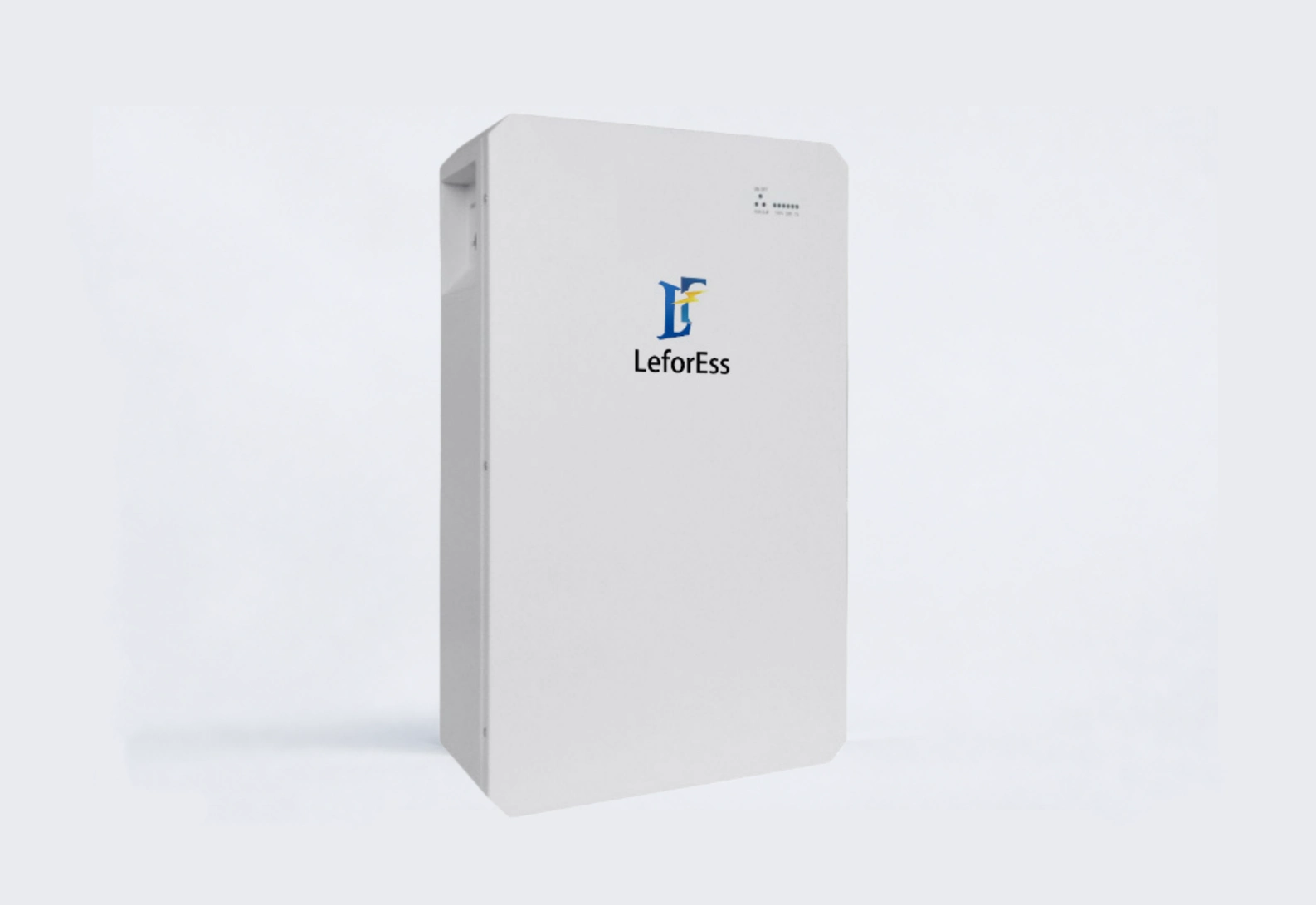
ELESHELL 10.2K 10.24kWh Low-Voltage Home Battery
A 51.2V 200Ah LiFePO4 battery for longer home backup, daily solar-energy shifting and modular 48V-class storage. Confirm the exact inverter model, firmware and communication protocol before ordering.
- 10.24kWh nominal energy
- 100A charge / discharge
- CAN / RS485 / RS232
- Wall or floor installation
Best-fit applications
More Runtime Without Moving to a High-Voltage Platform
The 10.24kWh tier doubles the nominal energy of a typical 5.12kWh module while keeping a familiar low-voltage architecture. Final suitability still depends on load power, usable-energy settings and inverter compatibility.
Longer essential-load backup
Support selected household circuits for longer after confirming continuous power, surge demand, reserve settings and inverter efficiency.
Daily solar energy shifting
Store daytime PV production for evening consumption, subject to the hybrid inverter, meter and local grid-control design.
Modular low-voltage expansion
The catalog states parallel expansion up to 15 units. Busbars, protection, cable symmetry and the approved controller method must be engineered for the project.
Published configuration
ELESHELL 10.2K Technical Data
These values were transcribed from the supplied LeforESS Product Catalog V3 content. Procurement should use the approved project data sheet, installation manual and written inverter matching confirmation.
| Battery chemistry | LiFePO4 |
|---|---|
| Nominal energy | 10.24kWh |
| Nominal voltage / capacity | 51.2V / 200Ah |
| Maximum charge / discharge current | 100A charge / 100A discharge |
| Communication | CAN / RS485 / RS232 |
| Parallel expansion | Up to 15 units according to the catalog |
| Cycle life | >6,000 cycles under catalog test conditions |
| Ingress protection | IP65 catalog rating |
| Installation | Wall-mounted or floor-standing |
| Dimensions | 871.1 × 519 × 133mm |
| Weight | 92kg |
| Catalog certifications | UN38.3, CE, IEC 62619, MSDS and RoHS |
Installation concepts
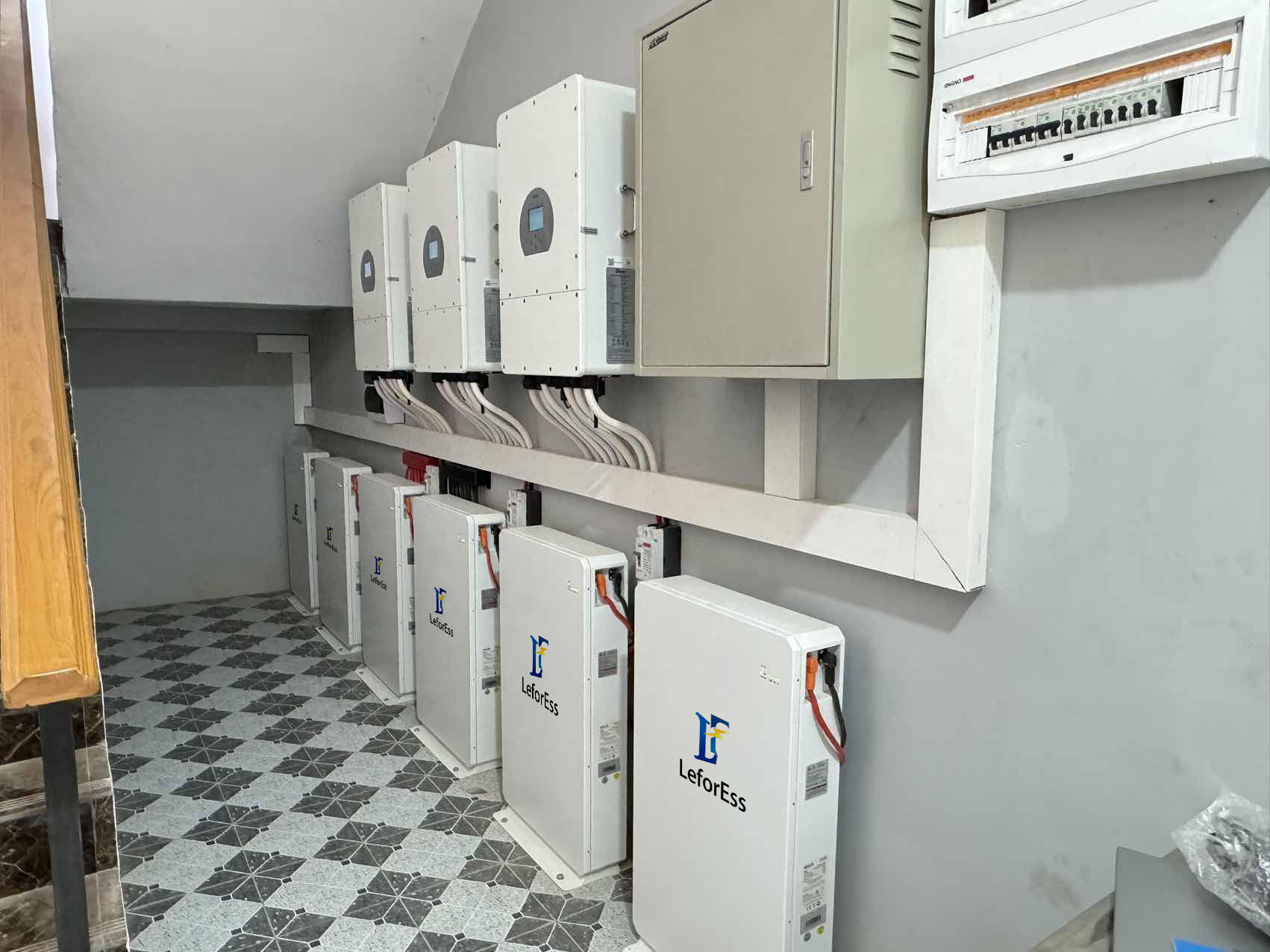
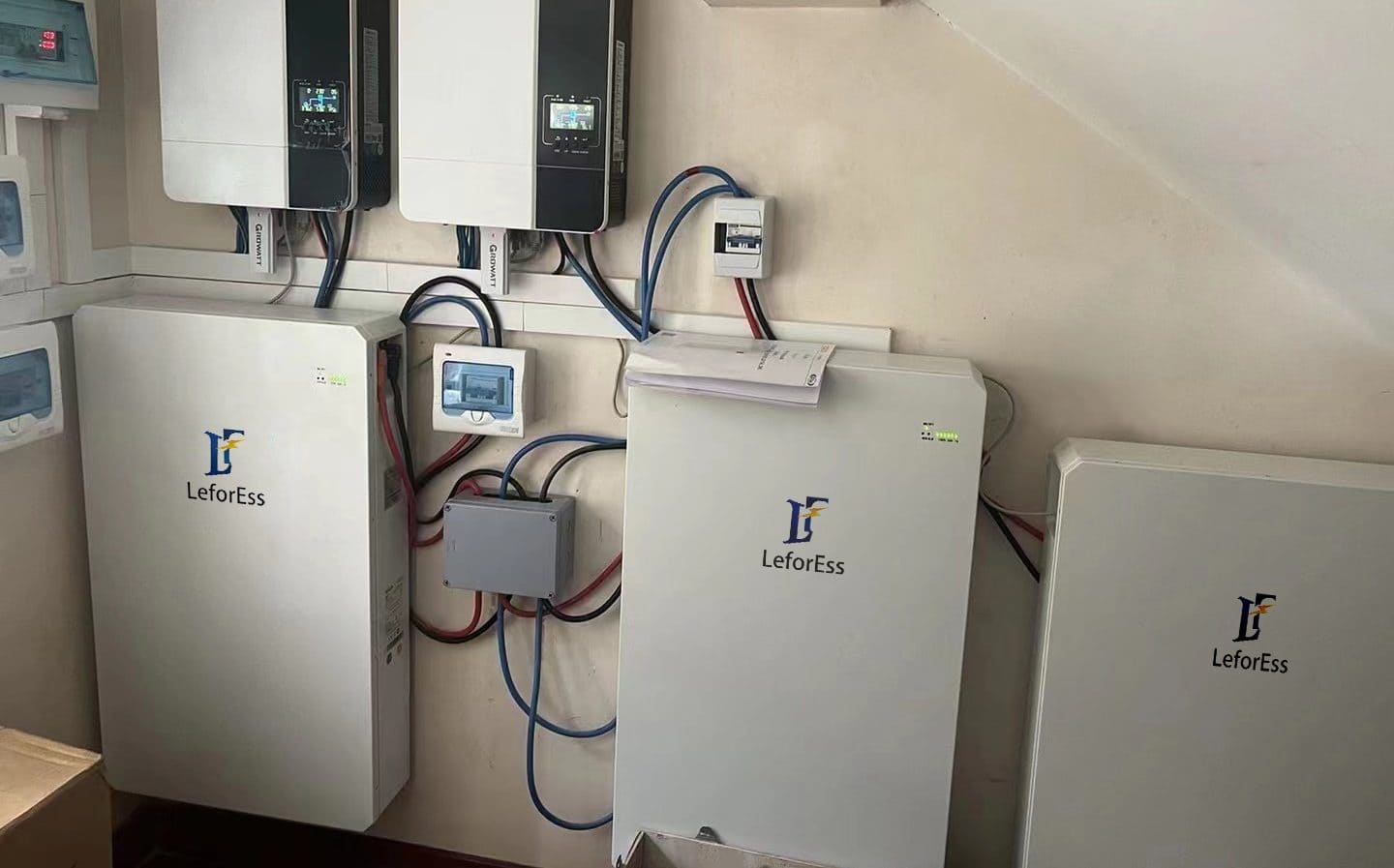
A Slim Cabinet for Floor or Wall Placement
The 133mm catalog depth supports space-conscious residential layouts. Installer access, structural support, clearances, cable routing and local code still govern the final position.
Selection logic
Size It by Energy and Current—Not kWh Alone
Energy answers “how long,” while discharge current helps determine “how much power at once.” A valid selection must pass both tests and then pass the communication check.
Energy defines runtime
Start with the average critical-load power, target backup hours, minimum reserve and expected inverter losses.
Current defines power
At 51.2V and 100A, the nominal DC power is about 5.12kW before cable, battery and inverter losses.
Surge needs margin
Motors, pumps, compressors and other starting loads require the inverter, battery and protection design to tolerate short peaks.
Required battery energy (kWh) = average critical load (kW) × backup hours ÷ usable fraction ÷ inverter efficiency
Before quotation
Information Needed for a Conversion-Ready Proposal
Share the actual system inputs so the quotation can define runtime, power, protocol, accessories and documentation instead of listing only a battery model.
- Exact inverter brand, model and firmware version
- Critical-load list, peak demand and backup-hour target
- Planned battery quantity and usable-energy reserve
- CAN/RS485 protocol, cable pinout and addressing method
- Indoor/outdoor position, mounting method and clearances
- Required breakers, fuses, cables, busbars and accessories
- Destination country, local code and certification needs
- Warranty, commissioning, shipping documents and lead time
Buyer questions
Practical Questions Before Ordering
The approved manual, inverter documentation and project design should govern the final answer for every installation.
Can this battery run any 48V inverter?
No. Nominal voltage is only the first check. The operating range, current, CAN/RS485 protocol, cable pinout and firmware must also match.
How many ELESHELL 10.2K batteries can be connected in parallel?
The supplied catalog states up to 15 units. The approved manual and project drawing should govern busbars, protection, equal cable lengths, addressing and commissioning.
How long will 10.24kWh run a home?
Runtime depends on usable AC energy and the average critical load. Reserve settings, inverter efficiency, temperature, standby consumption and load variation all change the result.
Does the 6,000-cycle figure guarantee the same life in every project?
No. Catalog cycle-life values depend on defined test conditions. Temperature, depth of discharge, charge/discharge rate, cell balancing and maintenance affect field performance.
Is everything required for installation included?
Do not assume so. Confirm power and communication cables, breakers, fuses, busbars, mounting hardware, termination parts, commissioning and any required meter or control accessories in the quotation.
Product-data source: supplied LeforESS Product Catalog V3 content. Further references: IEC 62619 and the UN Manual of Tests and Criteria. Final engineering must follow the approved data sheet, installation manual, inverter documentation, warranty terms and local electrical code.
Match the ELESHELL 10.2K to a Real Load Profile
Send the inverter model, critical loads, target backup time, installation environment and destination country. LeforESS can then confirm the battery quantity, protocol, protection and commercial scope.