

Ultimate Guide to the 5kW Off Grid Solar Power System
Build the load list first
| Load group | Power to record | Energy to record | Special check |
|---|---|---|---|
| Lighting/electronics | Simultaneous watts | Watts × hours/day | Night use and standby |
| Refrigeration | Running watts | Measured kWh/day | Compressor starting surge |
| Water pump | Running and starting watts | Run time/day | Motor surge and depth |
| Cooking/heating | Element watts | Use time/day | Often too energy-intensive for battery |
| Workshop tools | Highest simultaneous watts | Duty cycle | Motor and variable-speed drive behavior |
Four calculations that define the system
PV array kW ≈ daily load kWh ÷ peak-sun-hours ÷ system efficiency
Battery nominal kWh ≈ daily protected load kWh × autonomy days ÷ usable fraction
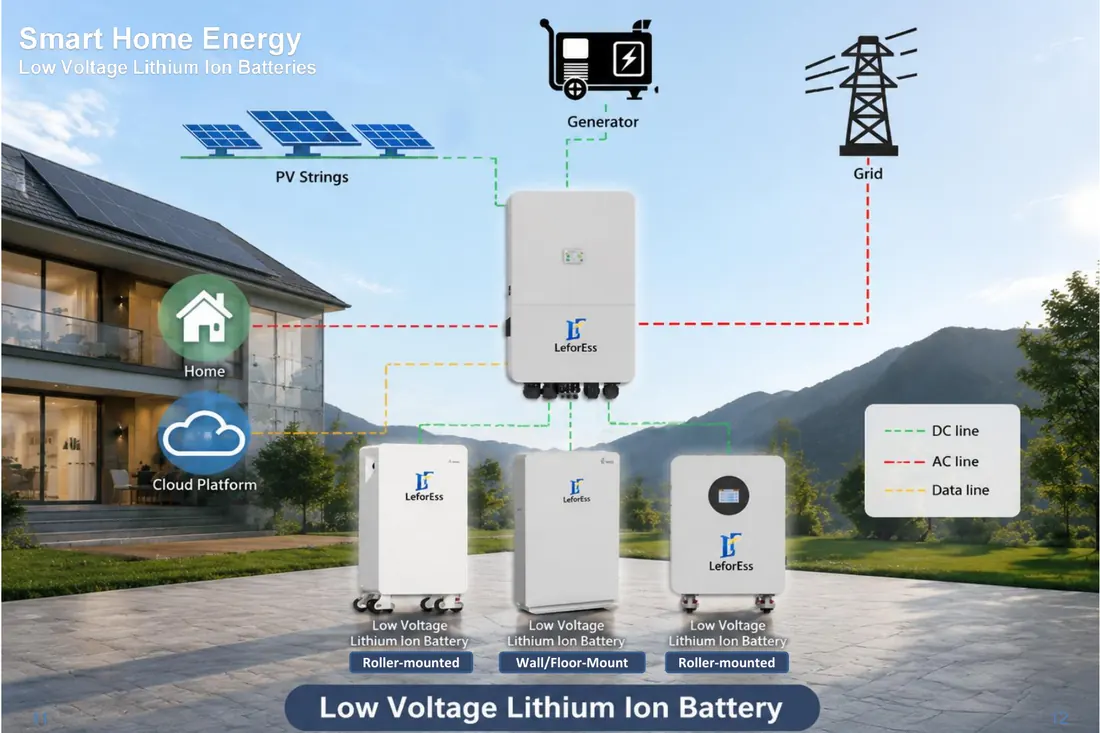
Next, verify inverter continuous power against simultaneous loads and its surge rating against motor starts. Finally, confirm that the solar charge controller or hybrid inverter can accept the planned PV voltage and current in the local temperature range.
Example 5kW off-grid configuration logic
| Design input | Example | Resulting decision |
|---|---|---|
| Daily protected load | 12kWh/day | PV and battery must replace about 12kWh plus losses |
| Solar resource | 5 peak-sun-hours | A planning array around 3kW before weather margin; many projects choose more |
| Autonomy | 1 day at 90% usable | At least ≈13.3kWh nominal before additional reserve |
| Peak simultaneous load | 4kW | Within 5kW continuous rating if temperature derating permits |
| Motor surge | 6–8kW momentary | Verify inverter surge duration and battery current |
Five expensive sizing mistakes
- Sizing the battery from inverter kW instead of load kWh.
- Using annual-average solar data for a system that must work in the worst month.
- Ignoring refrigerator, pump or power-tool starting current.
- Expecting the battery to reach BMS cutoff every night.
- Leaving no generator or load-shedding plan for extended bad weather.
What to send a supplier for an accurate quotation
- Installation location and minimum/maximum temperature.
- Daily appliance table with watts, hours and surge loads.
- Single-phase or three-phase voltage and frequency.
- Required autonomy and acceptable generator runtime.
- Roof/ground space, orientation and shading information.
- Local code, certification and installation-enclosure requirements.
Frequently asked questions
How many batteries are needed for a 5kW off-grid system?
Battery count depends on daily protected energy, autonomy, usable fraction and per-battery discharge current—not only the inverter rating.
How many solar panels are needed?
Divide daily energy by local peak-sun-hours and system efficiency, then convert array kW into panel count. Check inverter MPPT voltage and current limits.
Can a 5kW inverter start a water pump?
Only if its surge rating and duration exceed the pump starting demand and the battery can deliver the required current.
Do I need a generator?
For critical off-grid power, a generator or other dispatchable source can reduce the battery and PV oversizing needed for prolonged low-solar weather.
Sources and further reading
This sizing guide is illustrative. Final design requires local solar data, approved product limits, site survey, protection coordination and local code compliance.