
Energy storage solutions
Storage solutions for every scale.
From 5.12kWh home backup to 225.08kWh commercial BESS—matched to the load, inverter and site.
Low voltage · High voltage · Outdoor cabinets
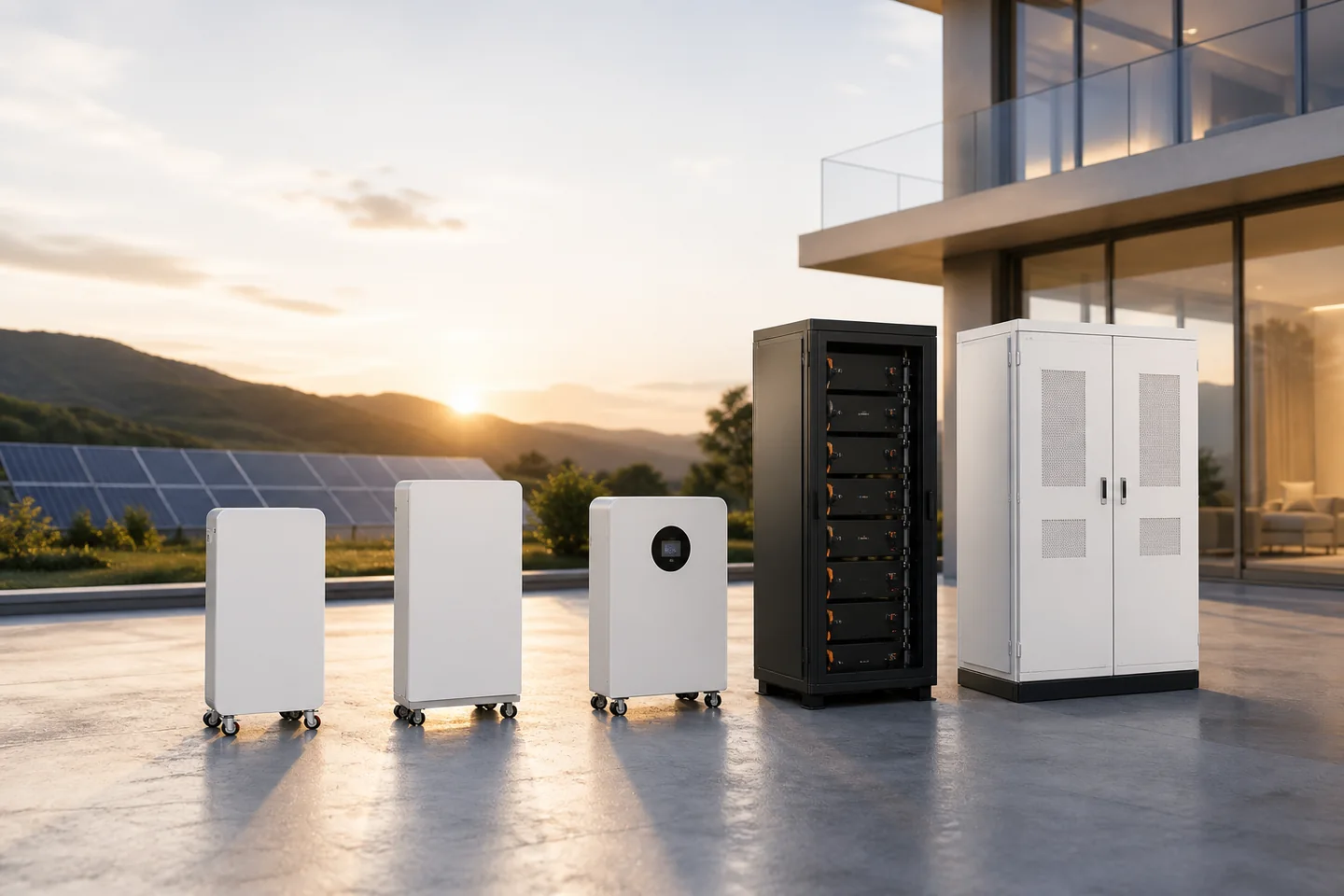
A scalable capacity ladder
Move from essential backup to a project-scale BESS
LeforESS covers a practical capacity ladder from low-voltage home batteries through modular high-voltage systems and outdoor cabinets. Select by application, power, usable energy, inverter interface, installation environment and expansion path.
Residential storage
Three low-voltage platforms. One clear expansion path.
The ELESHELL series uses 51.2V LiFePO4 platforms with CAN/RS485/RS232 communication and up to 15-unit parallel expansion in the catalog.
Compact essential-load backup and modular residential solar storage.
More runtime for daily energy shifting and selected household circuits.
Higher single-unit energy and current for larger residential backup goals.
Confirm the exact data sheet, usable-energy definition and inverter compatibility for each project.
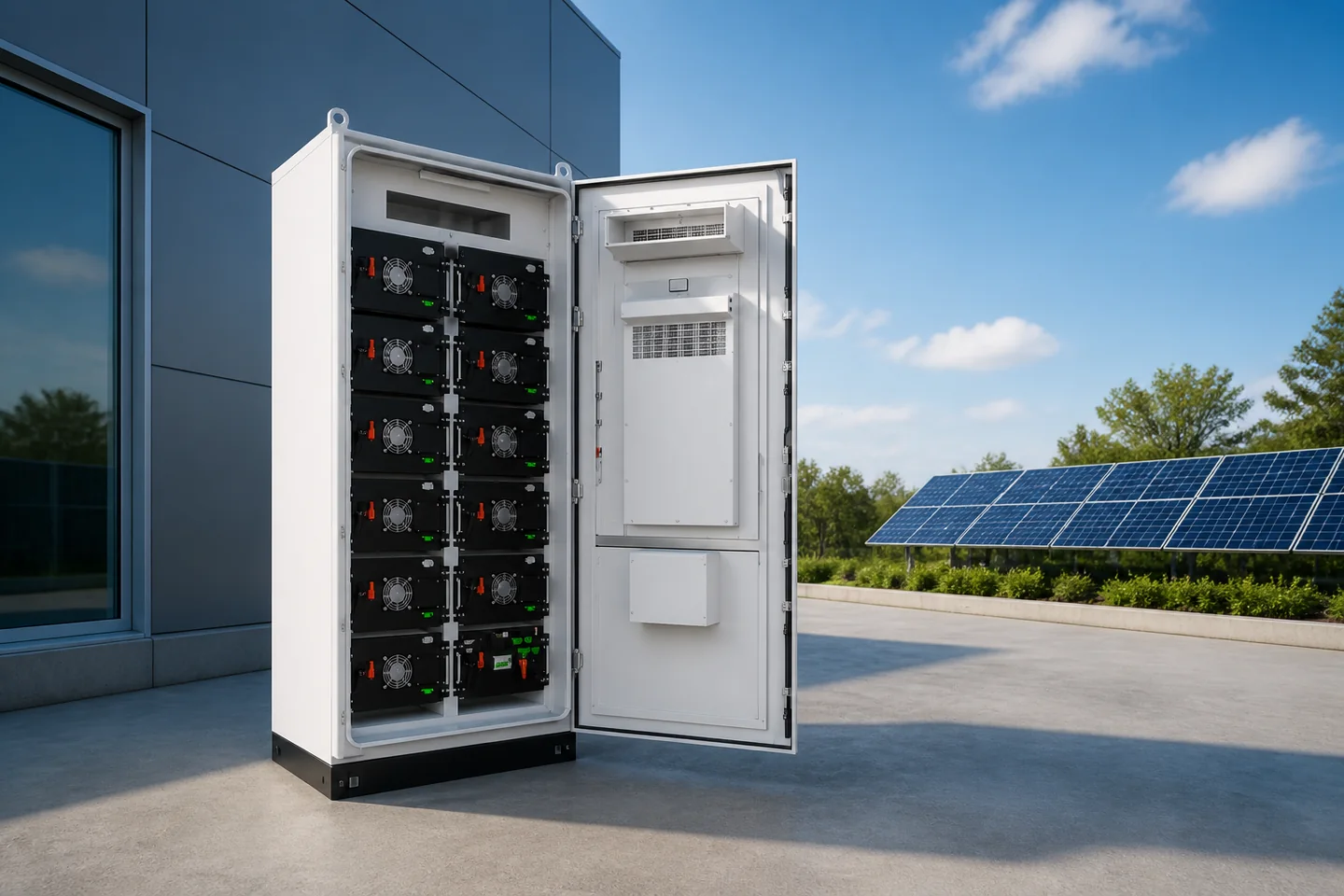
Commercial and industrial
Size the system around the load curve.
Commercial projects require a load curve and operating strategy before product selection. Peak shaving, solar self-consumption, backup and time-of-use shifting can lead to different power-to-energy ratios even at the same kWh.
- Define maximum charge/discharge power and required duration.
- Map grid, PV, generator, loads and transformer constraints.
- Specify PCS/inverter, BMS/EMS communication and controls.
- Complete protection, fire strategy and local permitting.
Choose by application
The architecture changes with the job
Energy is only one decision. The project must also match power, controls, site conditions and buyer inputs.
Essential backup
5.12kWh low-voltage storage based on critical loads and backup hours.
Larger residential
10.24–16kWh or parallel systems with more current and runtime.
Load shifting
20.48–102.4kWh high-voltage storage driven by the load curve.
Larger C&I
71.68–225.08kWh configurations defined by power and duration.
Outdoor cabinet
61.44–112.64kWh selected around climate, access and protection.
From inquiry to commissioning
A six-stage path to a project-ready system
Each stage closes a different risk before the equipment reaches the site.
Discovery
Load data, use case, site and commercial constraints.
Sizing
Power, energy, reserve, solar and backup assumptions.
Compatibility
Battery, inverter/PCS, BMS, EMS and communications.
Compliance
Market, transport, installation and documentation.
Acceptance
Specification freeze, production tests and packing release.
Commissioning
Settings, functional tests, monitoring and handover.
Conversion-ready RFQ
Send the inputs that change the design.
Better project inputs reduce quotation revisions and compatibility risk.
Frequently asked questions
What battery size is best for home backup?
Calculate average critical load × target hours, then adjust for usable fraction and inverter efficiency. Check current and surge separately.
When should I use a high-voltage battery system?
High-voltage architectures are common for larger residential and commercial systems, but the decision depends on inverter/PCS design, power, energy, efficiency and service strategy.
Can the system expand later?
Many catalog products are modular, but expansion must follow the approved manual, model matching, age/SoH guidance, firmware and protection design.
Does LeforESS provide OEM options?
Project requirements such as branding, interfaces, documentation and configuration can be discussed with the sales/engineering team; final scope depends on model and order.
Product range and further information
- LeforESS — product catalog and solutions
- LeforESS — home energy storage
- LeforESS — energy storage container solutions
Capacity ranges are transcribed from the LeforESS Product Catalog V3. Final selection and installation must use the approved project data sheets, manuals, drawings and local requirements.