
how low can you drain a lifepo4 battery:A Practical Guide to Safe Discharge Limits
DoD, SoC and usable energy in plain language
State of charge (SoC) is the percentage remaining. Depth of discharge (DoD) is the percentage already used. They add up to approximately 100%: a battery at 20% SoC has reached about 80% DoD.
Usable energy = rated energy × allowed DoD × system efficiency
For example, a 5kWh battery limited to 90% DoD has 4.5kWh available before conversion losses. At 90% inverter efficiency, roughly 4.05kWh reaches AC loads. Actual results vary with temperature, load, battery condition, standby consumption and manufacturer ratings.
| Battery setting | Approx. usable DC energy from 5kWh | Typical reason |
|---|---|---|
| 70% DoD / 30% reserve | 3.5kWh | Long standby margin or conservative cycling |
| 80% DoD / 20% reserve | 4.0kWh | Balanced daily use and backup reserve |
| 90% DoD / 10% reserve | 4.5kWh | Higher usable energy when product permits |
| Protection cutoff | Not a normal operating target | Prevents cell over-discharge |
How low is too low for LiFePO4?
The answer exists at three different levels, and they should not be confused:
- Your operating reserve: the SoC at which the inverter stops serving optional loads—often 10–20%, depending on the application.
- The inverter’s low-battery shutdown: a coordinated setting that should stop discharge before the cells reach their hard limit.
- The BMS low-cell cutoff: emergency protection that blocks discharge when one cell reaches the configured threshold.
As one manufacturer-specific example, Victron describes a default “Allowed-To-Discharge” cell threshold of 2.80V and notes that BMS shutdown is a last resort. It also warns that residual loads can continue draining a fully discharged battery. Those numbers are not universal settings; use them only to understand the protection hierarchy. See the Victron operation guide.
How to choose the right discharge limit
Daily solar self-consumption
Start with the manufacturer’s recommended maximum DoD. If the warranty allows 90% DoD, a 10–20% operating reserve can balance evening energy use with protection against unexpected loads and poor solar weather.
Emergency backup
Reserve is more valuable than maximum daily discharge. Keeping 20–30% available may be sensible if outages are frequent or critical loads must ride through the night.
Off-grid systems
Design for several low-solar days instead of relying on BMS cutoff. Load shedding, generator start and low-SoC alarms should act before the hard battery limit.
Seasonal storage
Do not store the pack fully depleted. Follow the product’s storage SoC, temperature and recharge interval; these vary by manufacturer.
If you are still sizing the bank, compare Lefor LiFePO4 battery options and use the separate 5kWh battery runtime guide to translate usable energy into hours.
Why LiFePO4 voltage alone can mislead you
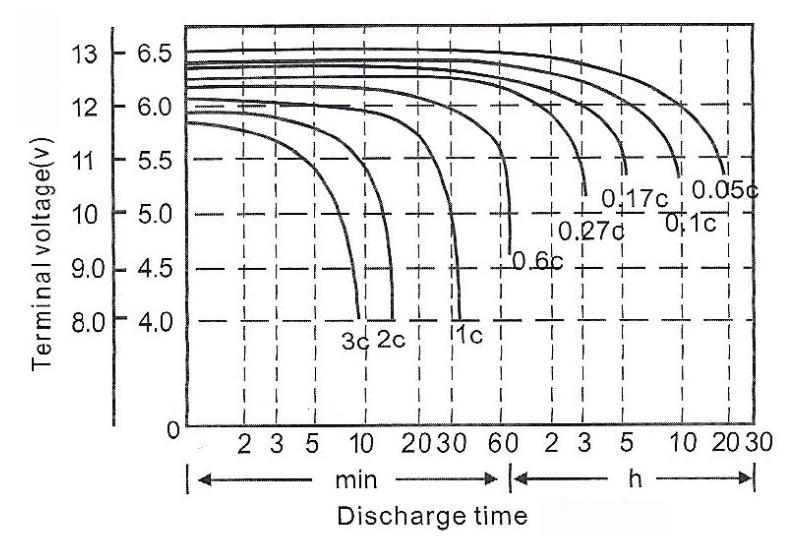
LiFePO4 has a relatively flat discharge curve. Terminal voltage changes with load, temperature, wiring loss and how long the battery has rested, so a single voltage reading is a poor fuel gauge through much of the cycle.
- Use a compatible BMS or battery monitor that tracks current over time.
- Check the lowest and highest cell voltages, not only pack voltage.
- Review state of health, temperature and recent high-load events.
- Coordinate battery, inverter and charger limits; avoid conflicting thresholds.
Manufacturer data can also define an end-of-discharge voltage for a specific pack. Victron, for example, publishes 11.2V for its 12.8V battery and 22.4V for its 25.6V battery in the model-specific technical data. Do not copy those values to a different chemistry, cell count or brand.
What to do after a low-voltage cutoff
- Turn off or disconnect loads using the approved system controls so residual consumption stops.
- Check for physical damage, swelling, odor, water exposure or abnormal temperature. If present, stop and call a professional.
- Use the approved charger/inverter wake-up procedure in the battery manual. Some systems need a small recovery charge before normal charging begins.
- Review BMS alarms and cell balance before returning the battery to normal load.
- Find the cause: insufficient solar, excessive load, incorrect limits, a communication fault, imbalance or loss of capacity.
Do not improvise a power supply connection or apply a voltage outside the battery’s approved charging method. A cutoff that repeats is a system-design or maintenance problem, not an inconvenience to reset.
Frequently asked questions
How low can you safely drain a LiFePO4 battery?
For many solar and backup systems, a routine limit around 80–90% depth of discharge leaves a useful reserve, but the correct setting is the value permitted by the battery manufacturer, BMS and warranty. BMS shutdown should be emergency protection, not the daily target.
Is 100% depth of discharge safe for LiFePO4?
A compatible BMS may permit nearly all rated capacity to be used, but repeatedly operating to shutdown leaves no reserve and increases the risk of an over-discharge event from residual loads. Follow the product-specific limit rather than forcing 100% DoD.
Does a deeper discharge reduce cycle life?
In general, shallower cycling can improve cycle life, but the relationship depends on cell design, temperature, charge rate and the manufacturer’s test conditions. Compare warranty energy throughput and the cycle-life test conditions, not cycle count alone.
What happens at low-voltage cutoff?
The BMS should block further discharge to protect the cells. Recharge using the approved procedure; repeatedly bypassing or resetting the protection can damage the battery.
Sources and further reading
- Victron Energy — Lithium Battery Smart operation
- Victron Energy — Lithium Battery Smart technical data
The figures in this article are planning guidance. The approved battery data sheet, BMS limits, inverter settings, local code and warranty govern the actual installation.