
Shipping Energy Storage Systems from China: Documents, Packing & Buyer Checklist
A practical door-to-door workflow
- Define cargo: model, battery energy, quantity, dimensions, gross weight and accessories.
- Confirm compliance: UN 38.3 evidence, SDS, classifications and destination requirements.
- Engineer packing: terminals protected, movement controlled, cabinets secured and marks applied.
- Book transport: share the complete document set with the forwarder and carrier.
- Inspect and load: record labels, crate condition, container loading and seal.
- Clear and deliver: prepare customs data, unloading equipment and site access.
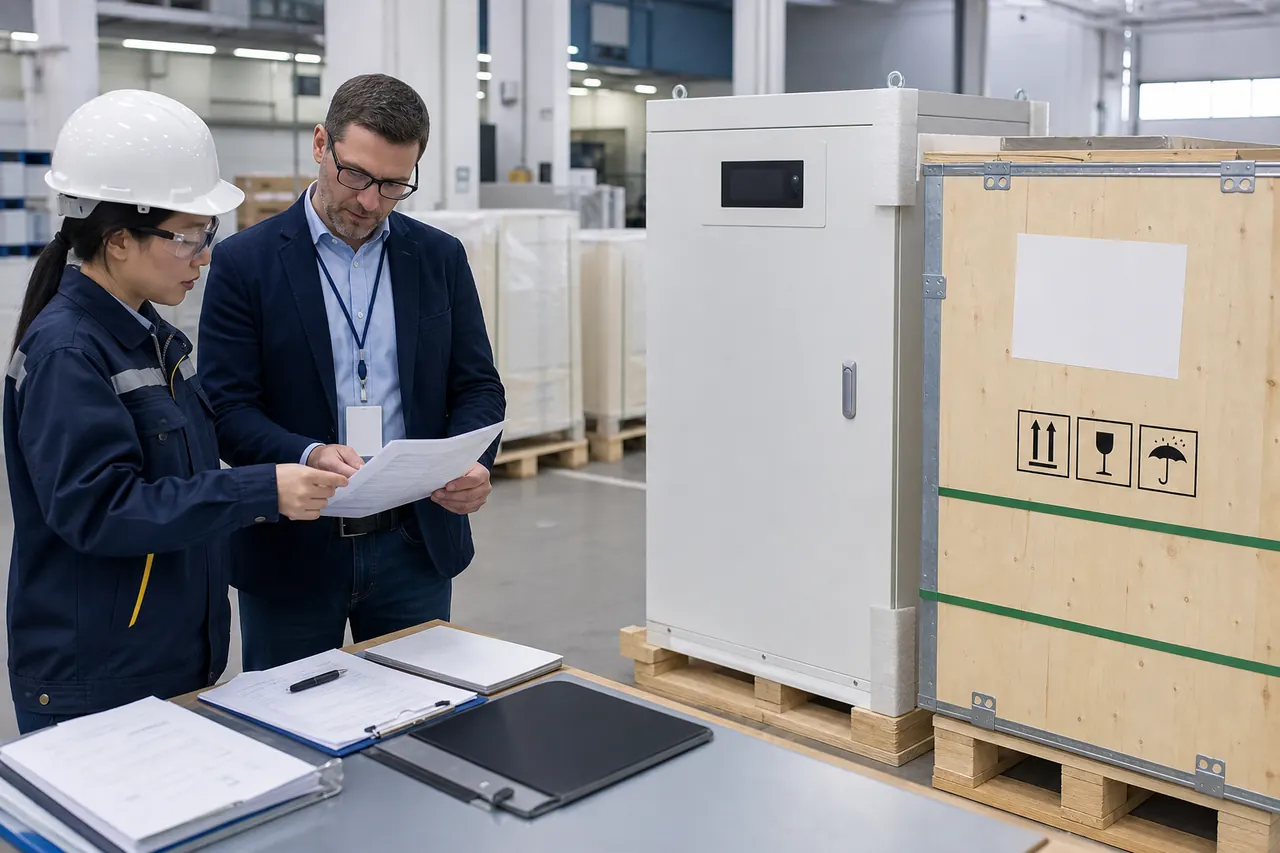
Core shipping document checklist
| Item | Typical purpose | Critical cross-check |
|---|---|---|
| Commercial invoice and packing list | Customs and cargo description | Model, quantity, value, net/gross weight |
| UN 38.3 evidence | Lithium battery transport testing | Exact model/configuration and manufacturer |
| SDS/MSDS | Handling and emergency information | Current version and language |
| Dangerous-goods declaration | Carrier acceptance where required | Classification, quantity and packing |
| Certificate of origin / conformity documents | Destination clearance where applicable | Market and consignee requirements |
| Bill of lading / airway bill | Transport contract and release | Names, ports, package count and marks |
Packing and loading points buyers should photograph
- Terminal protection, switch position and isolation of loose metal parts.
- Unit restraint inside carton, crate, rack or cabinet.
- Moisture protection, shock protection and lifting points.
- Package and container marks visible and consistent with documents.
- Gross weight, center of gravity and forklift/crane instructions.
- Container blocking, bracing, final door condition and seal number.
Build a lead-time plan with approval gates
| Gate | Buyer approval | Why it prevents delay |
|---|---|---|
| Technical freeze | Model, quantity, interfaces, accessories | Stops late configuration changes |
| Document review | Reports, SDS, labels and consignee data | Finds mismatches before booking |
| Production release | QC records and serial list | Prevents unapproved cargo |
| Packing release | Photos, marks, weights and dimensions | Supports carrier acceptance |
| Loading release | Container condition and seal record | Creates shipment evidence |
Frequently asked questions
Can an energy storage cabinet ship like ordinary machinery?
A cabinet containing lithium batteries generally requires battery-specific classification, documents, packing and carrier acceptance. Confirm the exact configuration.
Who should verify the document pack?
The manufacturer, qualified forwarder, carrier, customs broker and destination compliance team each have a role. Obtain written route-specific confirmation.
Should batteries and inverters ship together?
They can be part of one project shipment, but packing, classification and documentation must describe each item correctly. The best arrangement depends on route and cargo.
What causes the most avoidable delay?
Model/report mismatches, incomplete consignee data, late packing changes, inaccurate weights and booking with a carrier that has not accepted the cargo.
Sources and further reading
This is operational guidance, not legal or carrier advice. Validate current route-specific requirements with qualified dangerous-goods professionals and the accepting carrier.