

How to Evaluate a LiFePO4 Battery OEM Manufacturer in China
A practical OEM supplier scorecard
| Area | Evidence to review | Red flag |
|---|---|---|
| Engineering | Requirements review, drawings, BMS profile, DFM record | Quotation changes without a controlled specification |
| Incoming quality | Cell grading, supplier records, sample inspection | No batch traceability |
| Production | Work instructions, torque/insulation controls, ESD | Quality depends on one operator’s memory |
| Testing | Capacity/energy, aging, protection and communication records | Only a power-on test |
| Compliance | Model-matched reports and controlled labels | Documents for a different configuration |
| Change control | Written approval process and revision history | Silent cell/BMS/firmware substitution |
| After-sales | RMA flow, remote logs, spares and response time | Warranty terms without evidence process |
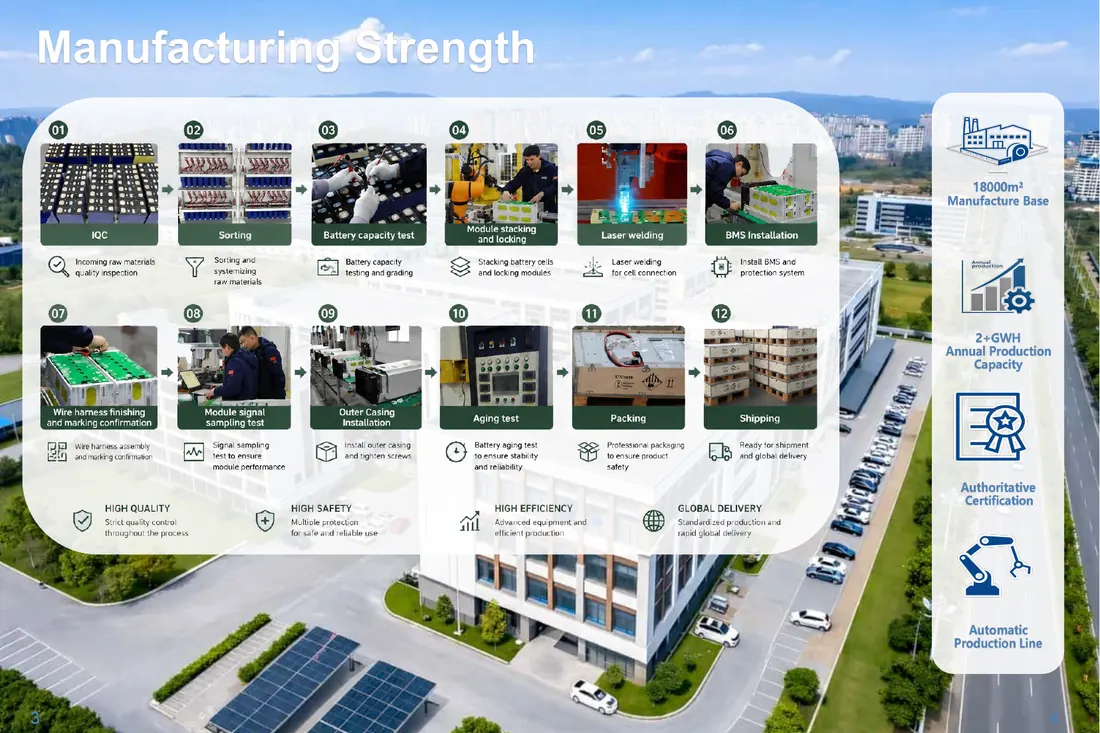
Questions to ask during a factory audit
- How are cells matched and linked to production lots?
- Who controls BMS firmware and inverter protocol updates?
- Which tests are 100% and which use sampling?
- How are torque, insulation and capacity records stored?
- What triggers quarantine, rework or corrective action?
- How are engineering changes communicated to customers?
- Can the factory demonstrate a real warranty investigation?
Turn the sample into a manufacturing contract
After sample approval, freeze the bill of materials, drawings, firmware checksum/version, labels, packing, accessories and acceptance tests. Attach these to the purchase specification and define which changes need requalification.
Information that improves an OEM quotation
- Nominal energy, voltage, current and application duty cycle.
- Target inverter models and required CAN/RS485 profiles.
- Mechanical envelope, IP rating, connectors and installation method.
- Destination markets, test standards and labeling requirements.
- Forecast quantity, sample schedule and mass-production timing.
- Acceptance tests, warranty process and spare-parts expectations.
Frequently asked questions
What is the difference between an OEM and a trader?
An OEM controls product engineering or manufacturing and can provide process evidence. A trader may still add value, but buyers should understand who controls design, quality and warranty.
Which certificate should I ask for?
It depends on product, application and market. Request reports and certificates that match the exact model and verify their scope, edition and issuer.
How many samples should I test?
Choose a plan based on project risk and order size. At minimum, test the approved configuration under documented energy, current, communication and protection conditions.
What is the most important contract clause?
A controlled specification with written change approval is critical because unapproved component or firmware changes can affect performance, compliance and compatibility.
Sources and further reading
Supplier evaluation should be proportionate to the order and market risk. Independently verify legal, compliance and quality evidence for the exact product.